Spartan Houston Texas Trifecta Weekend 3/14/26
- 2 days ago
- 14 min read
Updated: 20 hours ago




EXP-003 — Race Review
Venue: 7iL Ranch — Cat Spring, Texas
Address: 5389 Mill Creek Rd, Cat Spring, TX 78933
Coordinates: 29.9004488, -96.3072827
Date: March 14–15, 2026
Distances: Beast / Super / Sprint
Course Conditions
Terrain: Sandy footing throughout with rolling hills
Primary Difficulty Factors: Loose sand and Heat exposure
Weather Conditions
Saturday — March 14, 2026
Temperature: ~73°F (day) / ~63°F (night)
Humidity: ~58%
Conditions: Clear / Sunny
UV Index: 6–8 (High–Very High)
Sunday — March 15, 2026
Temperature: ~73°F (day) / ~61°F (night)
Humidity: ~61%
Conditions: Cloudy
UV Index: 3–5 (Moderate)
Key Takeaways
Sandy footing defined the course, adding a steady energy cost across all distances, but this remained a highly runnable venue with no major climbs or technical terrain.
The course design improved this year, with more varied routing and a final obstacle section spread over the last mile, allowing for running between efforts rather than a congested festival-area finish.
Obstacle sequencing—especially carry-to-strength transitions—added localized fatigue without disrupting overall flow.
From an operational standpoint, the shift to a more streamlined, modular medal system reflects broader changes in the sport, balancing recognition with sustainability while keeping the core race experience intact.
No Rolling Mud, Dunk Wall, Fire Jump or Cold Wash Station at this race.
Incorrect Tyvolean Traverse build.
Field Note: A friend shared code JAKE30, which can be used for a discount on future races.
Quick Links
Race Review
Expedition Notes
Introduction

Welcome to Cat Spring, Texas and the 7iL Ranch—I hope you like sand. If not, well… you’re about to become friends with it. It’s everywhere—on the course, in your shoes, in your socks, and somehow in places you won’t fully understand until you unpack at home. This is not occasional sand. This is full Paul Atreides walking into the desert level immersion. At some point during the race, you stop fighting it and just accept that you’re living in it, moving through it, and taking part of it with you whether you want to or not.
And that’s really the point—this terrain defines this part of the country, and for one weekend, it defines the race.
Travel & Access

Access to the venue is straightforward, with Houston (IAH) and Austin (AUS) offering roughly comparable drive times (see map for reference). IAH is the more stable option operationally, with a consolidated Rental Car Center and consistent throughput; from there, it is about 85 miles (roughly 1 hour 15–30 minutes) northwest to Brenham via TX-290, followed by a simple 30-minute drive south to Cat Spring.
Austin remains a viable alternative based on flight availability, with a similar overall drive time, but recent TSA staffing disruptions have introduced delays and variability in processing times. This may remain a factor over the next 30 days, so travelers should monitor conditions closely and build in additional buffer time if routing through AUS. In all cases, Brenham serves as the practical base—about 30 minutes from the venue—with dependable access to hotels, food, and supplies, while Cat Spring itself remains a rural farming and ranching area with no meaningful lodging infrastructure.
Lodging (Brenham)
Best Western Inn of Brenham — 1503 Highway 290 E, Brenham, TX 77833
Shank Gym Choice: Clean, cost-effective, and offers a hot breakfast starting at 5:00 AM
Comfort Suites Brenham — 2350 S Day St, Brenham, TX 77833
Alternate Option: Good alternative, but elevated pricing during this event window placed it outside the typical race budget
https://www.choicehotels.com/texas/brenham/comfort-suites-hotels/tx735
Hampton Inn & Suites Brenham — 2605 Schulte Blvd, Brenham, TX 77833
https://www.hilton.com/en/hotels/bretxhx-hampton-suites-brenham/
Holiday Inn Express & Suites Brenham South (IHG) — 2685 Schulte Blvd, Brenham, TX 77833 https://www.ihg.com/holidayinnexpress/hotels/us/en/brenham/cllbr/hoteldetail
Americas Best Value Inn & Suites Brenham (Sonesta) — 2217 S Market St, Brenham, TX 77833 https://www.sonesta.com/americas-best-value-inn/tx/brenham/americas-best-value-inn-brenham
Food (Brenham)
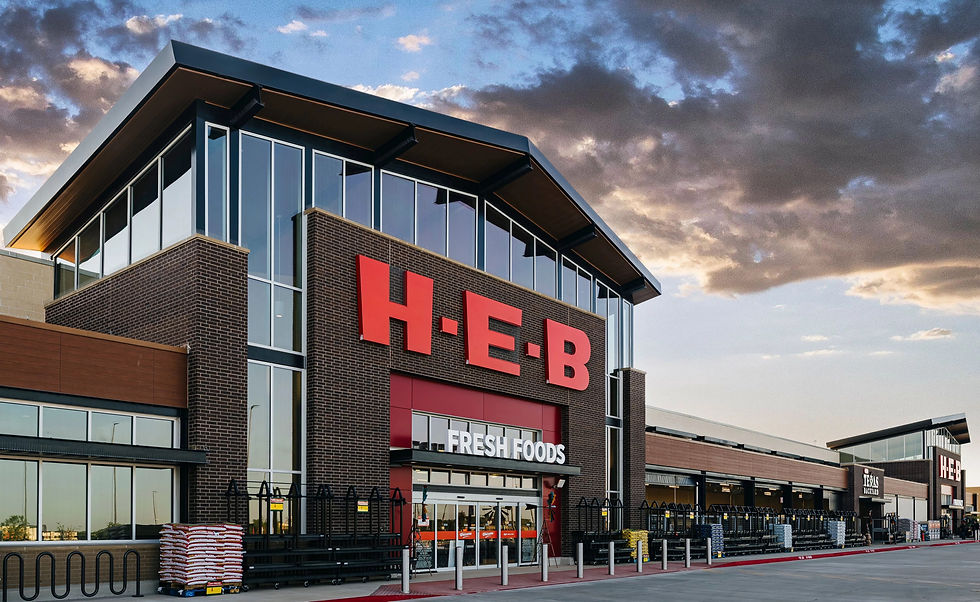
H-E-B (Grocery) — 2508 S Day St, Brenham, TX 77833
Shank Gym Choice: Large supermarket with fresh pre-made meals and standard race supplies; using in-room microwave can significantly reduce overall trip costs. https://www.heb.com/heb-store/tx/brenham/brenham-h-e-b-414
Truth BBQ — 2990 US-290, Brenham, TX 77833
Must Be Heaven — 107 W Alamo St, Brenham, TX 77833
Los Cabos Mexican Grill & Steak House — 2800 Hwy 36, Brenham, TX 77833
Volare Italian Restaurant — 102 S Ross St, Brenham, TX 77833
96 West — 103 S Baylor St, Brenham, TX 77833
Venue
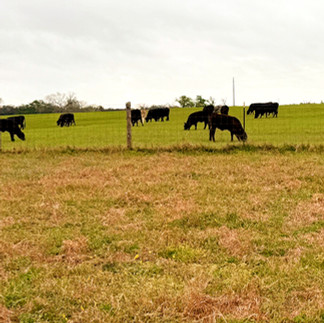
7iL Ranch sits in Cat Spring, Texas, and immediately reads as what it is—a working landscape rather than a constructed venue. Family-held since 1856 and spanning more than 1,100 acres, the property remains active in cattle, hay production, and horse operations, with an established trail network that gives the terrain a natural flow. It has been adapted to host events, but not reshaped for them, which is what makes it stand out as an OCR venue.
The ground itself is a defining feature. The entire course sits on sandy, well-drained soil typical of this part of southeast Texas—light, loose, and constantly shifting underfoot. It is not dramatic terrain in terms of elevation, but it is active terrain. Subtle rises, shallow cuts, and uneven surfaces reflect long-term water movement and erosion rather than engineered features. This is where the Dirt Project becomes relevant: what looks like a simple ranch field is actually a surface shaped by sediment transport, drainage patterns, and seasonal flow, all of which show up directly in how the course runs.

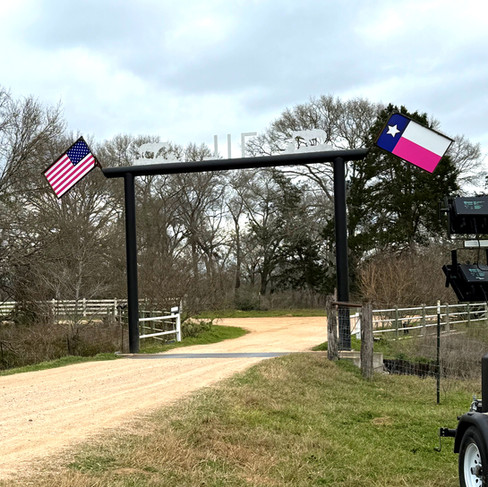

It is also, unmistakably, a working ranch. Manure is everywhere—on trails, in open fields, and in high-traffic areas—and becomes part of the environment you adapt to rather than avoid. This will make OCR Kings incredibly happy, but it’s simply a byproduct of using active land. There is no separation between the race and the ranch, and that is part of the venue’s character.
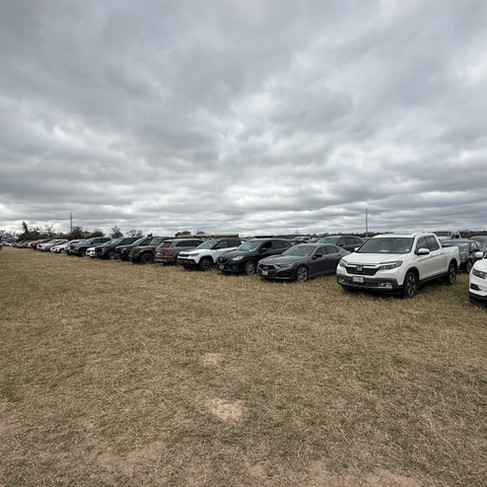
Logistically, this is one of the easier race mornings you’ll have. Both days, arriving around 7 a.m., parking was directly in front of the registration area—about a five-minute walk to check-in. Even as the venue fills in, the large open field keeps things simple and low-friction compared to more congested sites. It remains an active environment throughout, and the experience reflects that.
Festival Area
The festival area at this event felt more developed than recent stops like SoCal and Jacksonville. In addition to the standard presence from Border Patrol, the U.S. Army, and Team RWB (now a consistent fixture at these events), there was a noticeable increase in food and vendor support. Quest Nutrition and Kindling Protein Pretzels were handing out free samples, and alongside the usual Protein Puck at the finish line, there were expanded post-race food options including Up in Smoke BBQ and a dedicated breakfast coffee truck.

Team RWB (Team Red, White & Blue) continues to play a meaningful role in the event environment. As a national nonprofit focused on building community through fitness and service, they provide a consistent presence for veterans, service members, and supporters, reinforcing the broader connection between endurance events and long-term health and camaraderie. https://teamrwb.org


Vendors (New & Returning)
Quest Nutrition — https://www.questnutrition.com/
Kindling Protein Pretzels — https://www.kindlingsnacks.com/
Protein Puck — https://www.proteinpuck.com/

Starting Line/Awards
One operational gap stood out. Rico—well known across Spartan events—was responsible for starting line duties, the main stage, and awards across both days. Staffing and volunteer coverage at these types of events is always a challenge, but he stepped into multiple roles without hesitation and kept everything moving without drama. It’s hard to see how that load is sustainable over two full race days, but he delivered a consistently solid race day experience throughout.
Course

Terrain
This year’s layout—particularly for the Beast—was a clear improvement over prior versions. Earlier courses leaned heavily on perimeter routing around active pasture zones, but this iteration moved inward, using more of the ranch’s interior terrain. The result was a more varied and less repetitive experience, with routing through low tree cover, shallow ravines, dry creek beds, and uneven ground that introduced constant micro-adjustments rather than sustained climbing.
The defining feature, however, remains the surface. This is Gulf Coastal Plain terrain—loose sands and sandy loams derived from relatively young sedimentary deposits rather than exposed bedrock. The landscape appears flat at a distance, but under load it behaves differently. Water movement concentrates sand into shallow swales and drainage lines, creating zones of instability that disrupt stride and increase energy cost. This is not a course where elevation drives difficulty—the ground itself does.
The sand is continuous. Over distance, it places sustained demand on calves and dorsiflexion, particularly for runners not adapted to soft footing. Small patches of grass provide intermittent relief, but they are not reliable. This is a course where surface adaptation matters more than raw speed.
For those interested in a deeper breakdown, the Dirt Project section of this review examines the composition and behavior of the sand in detail, while Deep Time Observations traces how this Gulf Coastal Plain material was formed and deposited over geologic time.
The Night Sky Archives shares some astrophotography I captured over the weekend, under relatively dark skies in Brenham.
Obstacles
(Detailed mile marker and adjusted obstacle mapping available here) This is part of ongoing obstacle database project
Sprint
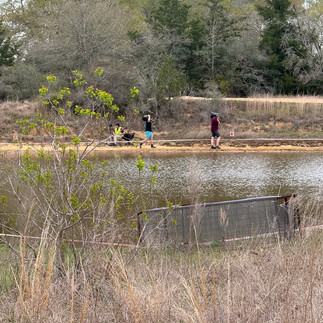
In the pre-race video, we discussed how the Sprint distance at this venue feels different due to the spacing and terrain. This was evident this year. By the time you reach M1, you're already facing a tight sequence of obstacles—4' walls, hurdles, a 6' wall, monkey bars, and an A-frame cargo—all packed closely together with almost no time to ease in. After that initial challenge, the course opens up enough to allow for some running before things get tight again around M2. That's where the effort picks up with the bucket carry, Hercules hoist, spear throw, and vertical cargo, all arranged closely enough to prevent your legs from settling.
The finish section from M2 to M3 is where everything compresses again, but this race had a different feel. With no dunk wall or rolling mud due to the water situation, there was no cool-down or reset—just more grind. They added an extra barbed wire crawl, and this is where the ranch really made itself known—a mix of sand and manure (insert OCR Kings manure joke here) under the wire, so you weren’t just crawling, you were dragging through it. Obstacles like the slip wall, plate drag, and sandbag carry followed quickly after, all layered together with no real break. It feeds into the final push with atlas carry and rope climb near M3. And instead of the usual fire jump, there was no fire at all because of the burn ban. You crossed the finish… and then kept going for about another quarter mile before getting your medal, which honestly felt like one last little tax at the end. Simple structure: hard start, working middle, and a dirty, drawn-out finish.





Super
The Super follows the same opening, but it changes pretty quickly once you get past M1. Right after the split—where the Sprint peels off—you go straight into more upper-body work with the 7’ wall, twister, bender, and beater. It’s not a second wave, it’s more like the first wave just keeps going. You don’t really get a chance to settle into a run before you’re back on the bars again.
Out in the M3–M4 range, the course starts to stretch out a bit, but it doesn’t get easier. Obstacles like stairway to Sparta at M3 and Olympus and chain carry at M4 keep breaking up your rhythm. You’re running, then stopping, then working, over and over. By the time you loop back toward the shared finish section at M6–M7, you’ve already put in enough work that everything feels heavier than it should.
Same deal as the Sprint at the end—no dunk wall, no rolling mud, just more crawling and carries with that extra barbed wire crawl thrown in. And again, you’re down in it—sand mixed with manure under the wire, which turns a normal crawl into something you’re just trying to get through as fast as possible. Then it’s straight into plate drag, sandbag carry, and rope climb, all hitting harder than they should at that point. No fire jump here either—just that extra quarter mile after the finish line before you’re actually done.
Equally notable was the absence of a cold wash station after the race. You end up coated in dirt, sweat, and whatever else was on the ground, and it remains that way unless you come up with a solution. For me, that involved stopping at HEB, picking up a few gallons of water, and rinsing off in the parking lot before heading to the airport. Not the best scenario, but it worked. That OCR Kings Beach Towel proved useful once again.


Beast
The Beast is where the course really opens up. After that same early section past M1, instead of looping back, you head out into a much bigger section of the property. This is where it starts to feel like a different race. By the time you get out to around M8, you hit the Tyrolean Traverse, which should have been a highlight—but it wasn’t built right. It was set too high, so they had everyone start about a quarter of the way in and finish early, basically cutting the obstacle down. From what it sounded like, that was a call made on the ground by volunteers to make it workable, but either way, it was clearly a build issue and not what it was supposed to be.
From there, the course keeps you honest. Armer at M9 and Irish Tables at M10 break up your stride, and the 8’ wall at M11 shows up late enough to remind you that you’ve been out there a while. This whole section isn’t about big obstacle clusters—it’s about the distance and the constant interruptions. You never really settle in.
When you finally come back in toward M12–M13, you hit the same finish sequence as everyone else, but it feels completely different after all that extra mileage. Still no dunk wall or rolling mud, still that added barbed wire crawl, and yes—still crawling through a mix of sand and manure that by this point you’ve already seen once or twice before. It’s not a surprise anymore, just part of the course. From there it’s straight into plate drag, sandbag carry, atlas carry, and rope climb. Then you cross the finish and keep going for that extra quarter mile before you’re actually done. At that point, it’s less about obstacles and more about just finishing what’s left..





Course Summary
Despite the constant presence of sand, this remains a highly runnable course—more so than many venues on the calendar. There are no sustained climbs, no technical trail sections, and no terrain that forces extended hiking or careful foot placement. The difficulty comes from surface resistance rather than structural obstacles.
With adequate offseason preparation—particularly calf strength and mobility—and proper hydration to avoid cramping, the sand becomes more of an inconvenience than a limiter. There are also opportunities to run strategically by seeking out firmer lines or patches of grass where available, which can reduce cumulative fatigue over distance.
Overall, this is a fast course. Even with heat and soft footing, the layout supports continuous forward movement and rewards pacing, surface awareness, and efficiency rather than brute strength or technical skill.
Seasonal Context
This race weekend conflicted with the Atlanta Trifecta, which typically presents a very different type of challenge. Atlanta is consistently mud-heavy—even in lower rainfall years—creating a course that is far less runnable and more dependent on grinding through saturated terrain. In contrast, Houston offers the opposite profile. The sandy Gulf Coastal Plain footing provides excellent drainage, resulting in virtually no mud and allowing for continuous movement across the course.
That contrast makes Houston a valuable opportunity early in the season. For athletes looking to establish rhythm, test pacing, and accumulate true running volume, this course provides conditions that are difficult to find on much of the calendar. With San Jose approaching in three weeks—another highly runnable venue—this stretch represents a window where efficient movement and race execution can be emphasized before transitioning into more terrain-limited courses later in the season.

Multi-Trifecta Medals
This was the first race of the season where Multi-Trifecta medals were available for athletes completing their 2x Trifecta. The system allows racers to transfer their individual distance wedges (Sprint / Super / Beast) from the standard event medal into a consolidated Multi-Trifecta display.
In this case, I chose to remove the individual distance hexes from the event medal and mount them on the Multi-Trifecta medal, while purchasing an additional event hex to keep the original medal intact and tied to the venue. This approach preserves both the achievement
From a design standpoint, this is a cleaner system. It reduces redundancy and allows athletes to configure their medals more intentionally. Spartan also removed the traditional weekend Trifecta medal in favor of a hex add-on, continuing the shift toward a more modular format.
These changes have generated pushback. Medal structures, shirts, and perks like the Spartan+ tent tend to draw strong opinions, and some racers clearly prefer the previous model built around accumulation and extras.
From my perspective, this comes down to sustainability. I sponsor races and have direct visibility into how thin margins can be in this space. Spartan is operating within the same constraints, and aligning race-day costs with revenue is not optional—it is required for the events to continue.
There is also a practical reality on the athlete side. I run a high volume of races on a long-term pass, and there is no scenario where Spartan is maximizing revenue from participants like me—and I am not unique. The Multi-Trifecta system is clearly designed with this core group in mind, but it needs to strike a balance. Supporting high-frequency racers matters, but over-indexing on extras for a small segment does not scale.
The broader OCR landscape reinforces that reality. BattleFrog, Warrior Dash, and others are gone. Tough Mudder survived through acquisition and operates with a reduced footprint. Savage Race has scaled back its schedule. The model that prioritized excess did not hold.
This is what OCR looks like in 2026: more controlled, more efficient, and more focused on the core event. The Multi-Trifecta system reflects that shift and represents a reasonable balance between recognition and sustainability.
End Race Review

Expedition 003 - Field Notes and Analysis
The Race Review, Dirt Project, Night Sky Archive, and Deep Time Observations represent four connected layers of the same system—experience, surface, sky, and time. The race review captures the immediate, lived experience of the event, while the Dirt Project focuses on the physical conditions underfoot through on-site sampling and terrain analysis. The Night Sky Archive extends the observation outward, placing each location within a broader cosmic context, and Deep Time Observations connects it all by tracing how present-day landscapes were formed through long-term geologic processes. Together, these layers move beyond simple documentation, linking performance, environment, and time into a single, structured record of place.

The Dirt Project
This section examines the sandy surface that defines the course, using on-site sampling and observation to understand its composition, drainage behavior, and impact on movement. What appears as simple footing is actually a dynamic sediment system shaped by water flow, redistribution, and compaction patterns across the ranch. The analysis connects these physical properties directly to race performance—how the ground behaves under load, where resistance accumulates, and why certain sections feel stable while others break down over distance.

The samples gathered in Cat Spring represent that process in physical form. Taken together, they capture a progression—from active river sediment, to recently deposited sand, to more stable surfaces where soil begins to develop. What appears to be uniform terrain is actually a system moving through different stages at once.
Night Sky Archive

This observation captures the Orion Nebula Complex (M42 and M43) as a single, layered star-forming system rather than separate objects. Recorded during a time-constrained field session under Bortle 6 suburban skies in Brenham, Texas, the image shows the dominant, high-energy core of M42 alongside the smaller, adjacent M43 region, divided by a dust lane that reveals structural boundaries within the same cloud. The result preserves the balance between emission, shadow, and noise while situating the image within a deeper temporal frame—light captured here began its journey around 680 AD. The full Field Report expands on capture conditions, processing decisions, and how this image connects cosmic formation, regional geology, and on-site environmental context into a unified system.


Deep Time Observations

Texas is easy to mistake for a place, but at the right scale it behaves as a system—built through repeated cycles of stability, flooding, collision, and surface reshaping over hundreds of millions of years. From its Precambrian foundation and buried mountain belts to sedimentary basins, inland seas, and an active Gulf margin, the visible landscape is the surface expression of a deeper structural history. The full Field Report develops this into a working model, linking deep-time processes to present-day conditions through the San Bernard River system and the field samples collected during Expedition 003.

Deep time shaped the Texas coastal region, building the layered foundation of sand and sediment that still defines the landscape today. What appears to be simple ground is actually the result of long periods of deposition, where ancient river systems spread material across broad floodplains and gradually constructed the surface from the bottom up.


Comments