Tne Writing Process
- Tom Shankapotomous
- 8 hours ago
- 2 min read

How material is gathered, organized, and turned into finished work.

The writing on this site doesn’t begin with writing.
It begins with reading, research, and field work — the parts of the process I actually enjoy most.
I read widely and take notes. I research topics that hold my attention long enough to warrant staying with them. When I’m on site for races, I also document the surrounding place: geology, night sky, terrain, and local history. That often includes field observations, astrophotography, and visits to museums or archives for broader context.
All of this material is captured and cataloged using tools and habits I learned over many years of academic and professional work. The goal isn’t output. It’s to keep track of what I’m learning so it doesn’t disappear.
Writing comes later.
How it works in practice
The process is straightforward and repeatable:
1) Gather material - Reading, listening, research, and field work. Notes from books and papers sit alongside field observations, images, measurements, and site visits. Everything is treated as source material.
2) Capture and organizeIdeas - observations, questions, and data points are recorded as small, durable notes. These are cataloged in a structured note environment (currently built in Notion) so they can be searched, linked, and revisited over time.
Nothing is written as a draft at this stage. The focus is capture, not expression.
3) Connect and refine - As notes accumulate, relationships start to emerge. Some ideas repeat. Some contradict each other. Some fade out. Others gather enough weight to justify further attention. This is where a Zettelkasten-style note system comes into play — not as a productivity technique, but as a way to let ideas compound and reveal structure over time.
4) Assemble when ready - When material coheres around a clear theme, it becomes an outline. The outline becomes a piece of writing. By the time this happens, most of the thinking is already done.
5) Publish as record - Publishing is a filing step, not a performance. The writing is stored so it can be referenced, linked, and built on later.
The writing you see on the site is the visible layer of this process — not the core activity itself.
Why this is shared
This way of working isn’t unique, and it isn’t proprietary.
It’s a practical research model that others may find useful, especially if they’re trying to manage reading, field work, and long-horizon thinking without turning it into content production.
Coming Up
The next sections explain the supporting structure in more detail:
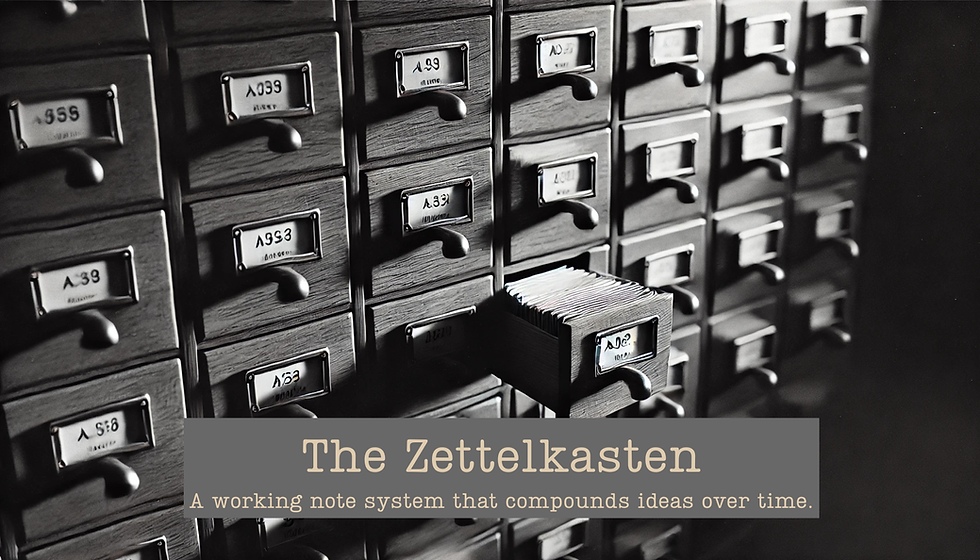
The Zettelkasten describes how notes are linked so ideas can accumulate and connect over time.
The Notion environment (covered in a separate essay) shows how this material is cataloged and maintained in practice.
The Web Ring explains how this work connects outward to other independent projects.
None of this is required to read the site. It’s context for those who want to understand the machinery behind the writing.
If you’re only here for race reviews, you can skip all of it and still get exactly what you came for.



Comments